Forging a Digital Path: Integrating the Erin High-Quality Tech Circuit Font into Your Creative Workflow
In the realm of digital design, typography is rarely just about legibility; it is about conveying a specific frequency of energy and intent. When a project demands a visual language that speaks to high-performance, advanced connectivity, and the intricate beauty of modern hardware, the choice of typeface becomes a critical strategic decision. The Erin font represents a significant evolution in display typography, offering a cyberpunk-luxe aesthetic that goes beyond simple styling. It is a tool engineered for the future, capturing the complexity of microchip pathways and copper-toned bevels within its very structure.
Understanding how to integrate a specialized asset like Erin into a professional workflow requires more than just installation. It requires a grasp of context, compatibility, and the specific psychological signals it sends to an audience. For designers, marketers, and brand strategists, the process of utilizing such a distinctive font involves planning for its impact from the earliest stages of concept development through to final production.
Understanding the Core Aesthetic and Function
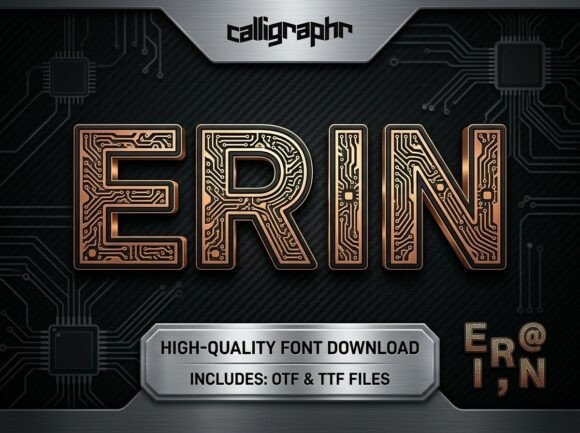
Before deploying Erin in a production environment, it is essential to deconstruct its visual components to ensure alignment with project goals. This typeface is characterized by dense circuit board patterns that flow through each character. This is not merely decorative; it serves as a texture that implies intelligence and technological sophistication. The copper-toned bevels add a sense of physical weight and luxury, grounding the digital aesthetic in tangible materials.
This unique combination makes Erin a specialized instrument. It is designed for display use, meaning it excels in headlines, logos, and hero text where its intricate details can be appreciated at scale. Attempting to use it for body copy would result in visual noise, but when applied correctly to high-impact areas, it creates an immediate focal point. For professionals in the tech sector, this font bridges the gap between cold, sterile technology and high-end, polished design.
Strategic Placement in the Design Process
Integrating a highly stylized font like Erin should happen during the ideation and mood boarding phase. Because the font carries such a strong "cyperpunk-luxe" vibe, it can dictate the direction of the surrounding design elements, such as color palettes, textures, and interface layouts. If a design team decides to use Erin late in the process, it often requires significant rework of existing elements to match its intensity.
Consider the workflow for a tech startup launching a new product. The branding phase typically involves selecting assets that communicate the company's values. By introducing Erin early, the designer establishes a visual anchor. The "circuit" nature of the font suggests that the product is sophisticated and built on advanced engineering. This sets expectations for the user before they even read the accompanying marketing copy.
Practical Implementation and Technical Integration
From a technical standpoint, utilizing a high-detail font requires attention to file management and rendering capabilities. Erin is a high-quality asset, and while it provides stunning visuals, it must be implemented with an understanding of the medium.
Digital Applications: Web and UI Design
When using Erin for web design or user interface elements, context is key. It is most effective in banner images, landing page hero sections, or as a stylized logo element. Because of the intricate "microchip pathway" details, the font renders best against high-contrast backgrounds. Dark, matte backgrounds—such as deep charcoal or midnight blue—allow the copper-toned details to pop, simulating the look of a lit motherboard.
In a web development workflow, this font should be converted to optimized formats (like WOFF2) to ensure fast load times, though designers should also consider using SVG formats for logo implementations to preserve the sharpness of the circuit patterns on high-resolution retina displays.
Physical Production: Packaging and Print
The utility of Erin extends beyond the screen into physical product design. For gaming hardware packaging, the font creates an immediate association with the internals of the device. When preparing files for print, the workflow must account for the complexity of the bevels. High-resolution rasterization is necessary to prevent the fine lines of the circuit patterns from filling in during the printing process.
For a freelance designer creating packaging for a cybersecurity firm, the process involves pairing Erin with clean, sans-serif typefaces for regulatory information. The hierarchy is clear: Erin handles the "hook" and the brand identity, while a utility font handles the data. This ensures the design remains compliant and readable while still vibrating with that necessary digital energy.
Workflow Synergy: Pairing and Composition
No font exists in a vacuum. The effectiveness of Erin is amplified by how it interacts with other design resources. A common pitfall in design workflows is the "clash of textures." Because Erin is visually dense and textured, it requires breathing room.
The Role of Negative Space
Effective implementation involves strategic use of white space. If a designer packs a layout with too many elements, the intricate details of the Erin font will be lost, and the design will feel cluttered. The workflow tip here is to treat the font as a graphical element as much as a typographical one. It commands a specific amount of canvas.
Complementary Assets
To build a cohesive brand system, Erin should be paired with assets that share its technological language but with lower intensity. For example:
- Color Theory: Use metallic accents (gold, copper, silver) in other UI elements to pick up the bevels in the font.
- Imagery: Pair the font with photography or 3D renders that feature macro shots of hardware, clean lines, or abstract light trails.
- Typography: Use a geometric sans-serif for subheadings. This creates a contrast between the complex, "intelligent" display font and the clean, functional text, guiding the reader's eye naturally.
Specific Use Cases and Industry Application
The versatility of the "Tech Circuit" aesthetic allows Erin to be adapted across several distinct professional sectors. The implementation strategy shifts slightly depending on the end goal.
Gaming and Esports Branding
In the gaming industry, visual identity is often about signaling performance. For esports team logos or tournament graphics, Erin provides an aggressive, futuristic look. The workflow here involves using the font to create "lockups"—combined arrangements of the icon and the team name. The circuit patterns within the letters reinforce the idea of high-speed data processing and low-latency performance, which are critical selling points for gaming peripherals.
Cybersecurity and Fintech
Trust and intelligence are the primary currencies in cybersecurity. A branding agency working with a security firm can use Erin to evoke a sense of impenetrability and advanced defense systems. The "integrated microchip pathways" serve as a visual metaphor for data encryption and secure networks. In a pitch deck or a whitepaper cover, using Erin for the title suggests that the content within is cutting-edge and authoritative.
Futuristic Cinematic Titles
For content creators and video editors, Erin is a powerful asset for titling. Whether for a YouTube intro or a cinematic poster, the font does the heavy lifting of setting the genre. It instantly communicates "Science Fiction" or "Cyber-noir" without needing extensive background illustration. The workflow involves layering the font with light effects—such as lens flares or scan lines—to accentuate the beveled texture, creating a dynamic motion graphic asset.
Long-Term Usability and Quality Control
When incorporating a specialized font into a long-term brand strategy, consistency is paramount. Once Erin is selected as the primary display typeface, it must be used consistently across all touchpoints to build recognition. This requires creating a Brand Style Guide that specifies exactly how Erin should be used—minimum sizes, approved color combinations, and clear space requirements.
Quality control involves testing the font across different mediums. Does the circuit pattern hold up on a small mobile screen? Is the copper bevel visible on a matte paper stock? Answering these questions during the prototyping phase prevents costly revisions later. By treating Erin not just as a download but as a core component of a design system, creators and businesses can ensure their visual identity remains sharp, relevant, and technologically evocative.
Ultimately, the Erin High-Quality Tech Circuit Font is more than a stylistic choice; it is a workflow accelerator for projects that need to communicate innovation immediately. By planning its integration carefully and respecting its detailed nature, professionals can leverage this asset to forge a compelling path into the future of their respective industries.