Claire: The Decorative Font That Demands Attention
In a world saturated with minimalist sans-serifs and safe serif families, choosing a typeface that truly stands out can feel like a risk. Yet, for designers and creators aiming to make an immediate impact, that risk is often necessary. Enter Claire, a decorative display font specifically engineered to be the center of attention. Unlike your standard workhorse fonts designed for body text, Claire is a piece of art in itself. It possesses a strong visual personality and unique artistic elements that break away from the ordinary, offering a bold solution for anyone looking to inject energy and originality into their visual projects.
Understanding the Nature of Claire
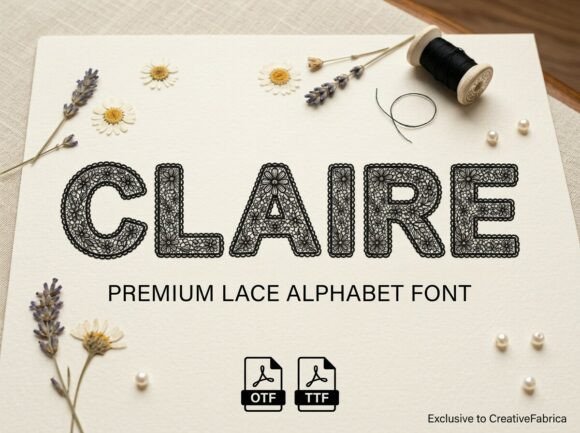
At its core, Claire is a decorative display typeface. This distinction is crucial for any designer or creator to understand before implementation. Display fonts are not intended for long paragraphs of text; they are designed to be viewed at larger sizes where their intricate details can be appreciated. Claire excels in this environment. Its letterforms are crafted with a distinct flair that makes every character feel like a standalone piece of design.
It is important to note the technical composition of Claire. Upon purchase, you will receive both OTF (OpenType Font) and TTF (TrueType Font) files. The OTF format is the professional standard, offering advanced layout capabilities for software like Adobe Illustrator, Photoshop, and InDesign. The TTF file ensures universal compatibility across different operating systems and devices, making it a versatile asset for any digital toolkit. However, the most defining characteristic of Claire is that it is an ALL-CAPS typeface. It does not include lowercase letters. This design choice is intentional; Claire is built for high-impact headlines, logos, and decorative initials where uppercase letters provide the necessary weight and authority.
Creative Applications and Visual Impact
The versatility of Claire lies in its ability to adapt to various creative contexts while maintaining a professional and polished finish. Because it is designed to be the focal point, it works exceptionally well in scenarios where brevity and visual punch are required.
Logo Design and Branding
For entrepreneurs and small business owners, a logo is more than just a name; it is a promise. Claire is particularly effective for brands that want to project confidence, creativity, or a modern edge. Because the font has such a strong personality, it can serve as the primary logo mark without needing excessive additional graphics. It is ideal for boutique agencies, creative studios, event planners, or lifestyle brands that want to signal they are different from the corporate norm. When using Claire for branding, ensure that the surrounding design elements are relatively subdued to let the typography shine.
Packaging and Product Presentation
In the realm of e-commerce and retail, packaging is the first physical touchpoint with a customer. Claire can transform a generic product box into a shelf-stopper. It is particularly suited for creative packaging—think artisanal goods, cosmetics, or specialty stationery. Using Claire for the product name or a catchy tagline on the packaging creates an immediate visual hierarchy. The "all-caps" nature of the font commands attention, ensuring that the product name is legible even from a distance or in a busy digital marketplace thumbnail.
Digital Content and Social Media
For bloggers, marketers, and content creators, the struggle to stop the scroll is real. Claire offers a solution for creating bold headlines on social media graphics, YouTube thumbnails, or website hero sections. Its decorative nature adds a layer of texture and interest that standard web fonts often lack. When used in a hero image or a featured banner, Claire can establish the mood of the content instantly, whether it is energetic, sophisticated, or avant-garde.
Tailoring Claire for Different Audiences
While the font itself is static, its application is fluid. Different users can leverage Claire to achieve specific goals tailored to their audience.
For Educators and Publishers: While Claire is not for body text, it is an excellent choice for book covers, chapter titles, or educational poster headers. It can help make a subject feel more engaging or modern, breaking the monotony of traditional academic typography.
For Freelancers and Hobbyists: If you are designing a personal portfolio or a wedding invitation suite, Claire adds a touch of bespoke elegance. Its artistic elements can elevate a simple invitation into a keepsake. However, because it is an all-caps font, it is wise to use it sparingly for headlines and pair it with a clean, legible serif or sans-serif font for the details (like date, time, and location).
For Event Marketers: Concert posters, festival lineups, and conference badges require typography that works hard. Claire’s high-impact nature ensures that the event title is the first thing a potential attendee sees, setting the tone for the experience before they even read the details.
Best Practices for Using Display Typefaces
Using a font like Claire effectively requires a bit of restraint and strategic thinking. Here are some practical recommendations to ensure your designs remain clear and effective:
- Hierarchy is Key: Use Claire for the primary focal point—usually the H1 headline or the logo. Use a secondary, more neutral font for subheadings and body text. This contrast creates a professional visual hierarchy that guides the viewer’s eye.
- Spacing and Legibility: Decorative fonts often benefit from adjusted letter spacing (tracking). Because Claire has unique artistic elements, you may need to increase the space between letters slightly to ensure readability, especially at smaller display sizes. However, avoid spacing it out so much that the word loses its cohesion.
- Context Matters: Consider the medium. Claire works beautifully on high-resolution screens and high-quality print. If you are designing for low-resolution environments or very small text sizes (like footnotes), switch to a simpler typeface.
- Color and Contrast: To let Claire do its job, ensure there is sufficient contrast between the text and the background. High-contrast color schemes (like black on white or white on a bold color) allow the intricate details of the letterforms to be fully appreciated.
Technical Considerations for Designers
From a technical standpoint, Claire is built to integrate smoothly into professional workflows. The inclusion of the OTF file means that advanced typographic features available in professional layout software are supported. This is particularly useful for designers working on complex print layouts or digital assets where precise control over typography is required.
The TTF file ensures that if you are working in environments that prefer older standards or basic text editors, the font will render correctly. This dual-format delivery makes Claire a robust choice for projects that span multiple platforms, from web design mockups to physical printed materials.
Breaking Away from the Ordinary
The primary value proposition of Claire is its ability to help creators break away from the ordinary. In a design landscape where templates and generic fonts are the default, using a typeface with a strong visual personality is a statement of intent. It suggests that the creator cares about the details and is willing to invest in tools that elevate the final product.
Whether you are designing a logo for a new startup, creating a header for a blog post, or packaging a new product, Claire offers a way to inject personality and artistry into your work. It is not just a font; it is a design element that commands the stage, ensuring that your message is not just read, but felt. By combining its unique aesthetic with thoughtful layout and complementary typography, you can create designs that are both visually stunning and functionally effective.