Really Honey: A Practical Look at This Eclectic Display Typeface
In the vast landscape of digital typography, finding a font that balances distinctiveness with broad utility can be a significant challenge for designers and creatives. The Really Honey typeface positions itself as a solution to this problem, offering a blend of styles within a single package. This article provides a practical evaluation of its design, use cases, and limitations to help you determine if it aligns with your project requirements.
Understanding the Design Philosophy of Really Honey
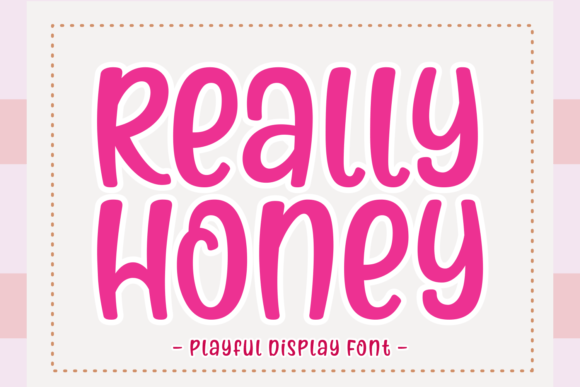
At its core, Really Honey is a display typeface, meaning it is engineered for impact at larger sizes rather than for readability in body text. Its defining characteristic is its eclectic nature. The font family incorporates several aesthetic influences: the fluidity of handwritten retro scripts, the exaggerated forms of cartoon lettering, and the substantial, rounded presence of "fat" or chunky display fonts. This combination results in a typeface that feels simultaneously playful, nostalgic, and bold. The letterforms often feature uneven baselines, variable stroke widths, and decorative swashes that contribute to its handcrafted feel.
Evaluating the Potential Benefits
The primary appeal of a font like Really Honey lies in its versatility for specific creative contexts. By offering multiple stylistic influences, it can serve as a comprehensive toolkit for projects requiring a fun, informal, or retro aesthetic. This can streamline the design process, potentially reducing the need to license and manage several separate fonts to achieve a similar layered effect.
- Visual Impact: The chunky, bold weight ensures high visibility, making it suitable for headlines, logos, and merchandise where grabbing attention is key.
- Thematic Cohesion: For projects centered around themes like vintage, party, craft, or children's content, the inherent personality of Really Honey can immediately establish the desired tone.
- Creative Flexibility: Its blend of whimsy and structure allows it to adapt to various applications, from a celebratory banner to a quirky product label.
Key Considerations and Tradeoffs
While Really Honey offers strong stylistic benefits, its suitability is highly dependent on context. The very features that make it distinctive can become limitations in other scenarios. A critical evaluation requires weighing these factors against your project's goals.
Readability vs. Style
The most significant tradeoff is between personality and legibility. The decorative swashes, irregular spacing, and complex letterforms that give Really Honey its charm can hinder quick reading, especially at smaller sizes or in lengthy phrases. It is not designed for body copy, instructions, or any context where clarity is the paramount concern. For such tasks, pairing it with a clean, simple sans-serif or serif font is essential.
Contextual Appropriateness
The font's strong character can clash with formal, corporate, or minimalist design languages. Using Really Honey for a law firm's branding or a luxury product brochure would likely undermine the intended message of professionalism and refinement. Its strength is in contexts where informality, joy, and creativity are celebrated.
Practical Application Scenarios
Understanding where a typeface excels is crucial for effective application. Really Honey tends to be a strong fit for the following types of projects:
- Merchandise and Apparel: Its boldness makes it ideal for t-shirt designs, tote bags, and hats where text needs to be legible from a distance and convey a specific vibe.
- Print and Digital Invitations: For birthday parties, baby showers, or casual events, it sets a cheerful and inviting tone.
- Greeting Cards and Scrapbooking: The handwritten and retro elements lend a personal, crafted feel perfect for sentimental projects.
- Blog Headers and Social Media Graphics: It can help create eye-catching titles for content related to DIY, cooking, parenting, or entertainment.
- Children's Material: Its playful nature is well-suited for book titles, educational posters, or product packaging aimed at a younger audience.
When to Consider Alternatives
No typeface is universally optimal. There are clear situations where an alternative to Really Honey would be more appropriate. If your project requires a tone that is serious, elegant, or highly professional, exploring fonts with cleaner lines and more neutral personalities is advisable. Similarly, if your primary need is for a font that excels in long-form text readability, a dedicated text family should be your focus.
Furthermore, if you need only one specific style—for instance, a pure retro script or a straightforward cartoon font—purchasing a specialized typeface dedicated to that single aesthetic might offer more authentic results and potentially a larger character set for that particular style.
Making an Informed Decision
To determine if Really Honey aligns with your goals, consider the following practical steps:
- Define Your Project's Core Tone: Write down 3-5 adjectives that describe the feeling you want to evoke (e.g., playful, nostalgic, bold, handmade). See if these align with the font's described character.
- Analyze Your Use Case: Will the font be used for short, impactful text or for running paragraphs? Really Honey is designed for the former.
- Test with Your Content: Before purchasing or committing, use any available preview tools to typeset your actual headlines or key words. Assess the legibility and visual harmony with your other design elements.
- Consider the Ecosystem: Does the font family include multiple weights or styles (e.g., bold, italic) that you might need for hierarchy? Does it support the character set required for your language?
In summary, Really Honey presents itself as a versatile display typeface for projects that value personality and visual impact. Its eclectic blend of styles offers creative potential for specific niches. However, its effectiveness is contingent upon careful application in the right context. By objectively evaluating its strengths against your project's specific demands for tone, readability, and context, you can make a well-informed decision on whether it is the right tool to bring your creative vision to life.