Evaluating the Authentic Appeal of the Wonderful Handmade Font for Your Design Projects
In the vast landscape of digital typography, the quest for a typeface that conveys genuine warmth often leads designers to explore handwritten options. However, the market is saturated with script fonts that range from overly polished to illegibly messy. Finding the middle ground—a font that feels authentically human without sacrificing utility—requires careful evaluation. This analysis explores the characteristics of Wonderful Handmade, a typeface designed to bridge the gap between digital precision and the organic flair of human penmanship. We will examine its features, compare it to broader categories of fonts, and discuss the specific scenarios where it excels or falls short.
The Anatomy of Wonderful Handmade: Beyond Basic Script
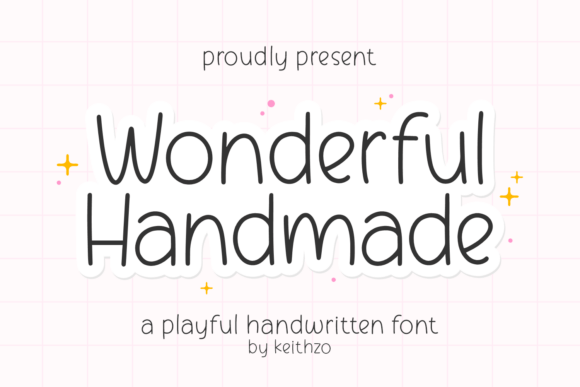
When assessing a font like Wonderful Handmade, it is essential to look past the general "handwritten" label and understand the specific design philosophy at play. Many script fonts suffer from either rigid uniformity—which makes them look like a computer trying too hard to mimic a human—or chaotic baselines that hinder readability. Wonderful Handmade positions itself as a character-rich typeface that embraces "alluring inconsistency." This means the letterforms vary slightly in their construction and connection, mimicking the natural pressure variations and stroke speeds of a person writing with a marker or brush pen.
The defining characteristic of this font is its playful vitality. Unlike formal calligraphy fonts that suggest wedding invitations or high-end luxury, Wonderful Handmade carries an amiable personality. It is designed to be inviting, making it a strong candidate for projects that aim to build immediate rapport with an audience. The "pristine lines" mentioned in its description suggest that despite the organic nature, the vector paths are clean, ensuring the font scales well for both print and digital use without appearing jagged or blurry.
Comparing Wonderful Handmade with Other Typography Categories
To understand the value proposition of Wonderful Handmade, it is helpful to compare it against the three main categories of typography: Sans-Serif, Serif, and other Script styles.
Contrast with Standard Sans-Serif and Serif
Standard fonts like Helvetica or Times New Roman prioritize legibility and neutrality. They are the workhorses of long-form text and corporate identity. However, they often lack the emotional warmth required for specific branding niches. Wonderful Handmade is not a replacement for body text in a novel or a technical manual; rather, it is a contrast tool. If a brand’s visual identity is otherwise clean and minimal, using Wonderful Handmade for headlines or logos introduces a necessary human element that sans-serifs cannot provide.
Comparison with Formal Script and Calligraphy
Formal scripts are often associated with tradition, elegance, and sometimes rigidity. They work well for luxury goods or formal events but can feel distant or pretentious in casual contexts. Wonderful Handmade trades that formality for approachability. While a calligraphy font might whisper "exclusive," Wonderful Handmade shouts "welcome." For a coffee shop, a children’s bookstore, or a lifestyle blog, this approachable tone is usually more effective than the stiff formality of traditional calligraphy.
Differentiation from "Grunge" or Messy Handwriting Fonts
On the other end of the spectrum are grunge fonts or intentionally messy scripts. These can be difficult to read and often look unprofessional if not used with extreme care. Wonderful Handmade avoids this trap by maintaining "pristine lines." The consistency in x-height and character width ensures that while the font feels casual, it does not feel sloppy. This balance is a key decision factor for designers who want personality without compromising the professional integrity of the layout.
Strengths and Ideal Use Cases
Evaluating the strengths of Wonderful Handmade reveals specific scenarios where it outperforms standard alternatives. Its primary strength lies in its ability to convey authenticity. In an era where consumers are increasingly skeptical of corporate polish, a font that looks hand-drawn can signal transparency and honesty.
Practical examples of best-fit situations include:
- Branding for Small Businesses: For bakeries, artisanal craftspeople, or local markets, Wonderful Handmade reinforces the "handmade" nature of the product. It creates a cohesive narrative between the product and the packaging.
- Stationery and Invitations: Because of its friendly personality, it is ideal for birthday party invitations, casual event flyers, or greeting cards where a personal touch is paramount.
- Digital Content Headers: In web design, using Wonderful Handmade for section headers can break the monotony of sans-serif text, guiding the user’s eye and adding a layer of visual interest.
- Social Media Graphics: The font’s playful vitality makes it highly shareable and attention-grabbing in fast-scrolling environments like Instagram or Pinterest.
Tradeoffs and Limitations to Consider
No typeface is a universal solution, and Wonderful Handmade is no exception. A balanced evaluation requires acknowledging its limitations. The very inconsistency that gives it charm can become a liability in certain contexts.
One significant tradeoff is legibility at small sizes. Handwritten fonts, by nature, have complex strokes that can merge or blur when reduced significantly. If your project involves fine print, legal disclaimers, or dense body copy, Wonderful Handmade would be a poor choice. In these instances, a highly legible sans-serif is the superior alternative.
Another consideration is professional gravity. While the font is excellent for approachable branding, it may not carry the weight required for corporate finance, legal services, or heavy industrial manufacturing. For these sectors, the "amiable personality" of Wonderful Handmade might be perceived as lacking seriousness. If the goal is to project authority and stability, a robust Serif or geometric Sans-Serif would be more appropriate.
Furthermore, typesetting complexity is a factor. Handwritten fonts often require more careful kerning (adjusting space between letters) than grid-based fonts. Designers using Wonderful Handmade may need to spend extra time manually adjusting letter spacing to ensure the connections between characters look natural rather than awkward.
Decision Factors: Is Wonderful Handmade Right for You?
When choosing between Wonderful Handmade and other resources, consider the emotional response you wish to evoke. If your design strategy relies on creating a "human connection" or emphasizing the artisanal quality of a product, this font is a strong contender. It serves as a visual shorthand for "crafted with care."
However, if your design requires a minimalist aesthetic where typography should recede into the background to let photography or product features take the lead, a neutral typeface would be a better fit. Wonderful Handmade demands attention; it is a feature, not a background element.
Consider also the longevity of the design. Trends in typography shift, and while handwritten styles are perennial favorites, the specific "vibe" of a font can feel dated if it aligns too closely with a fleeting trend. The "pristine lines" and classic brush-pen style of Wonderful Handmade suggest a timeless quality, but pairing it with other design elements should be done thoughtfully to ensure the overall composition remains relevant.
Conclusion: Making an Informed Typographic Choice
Ultimately, Wonderful Handmade offers a compelling solution for designers seeking to infuse their work with warmth and personality. It stands out in the crowded field of handwritten fonts by balancing playful energy with clean execution. By understanding its strengths in branding and stationery, and recognizing its limitations in formal or dense-text applications, you can make a strategic choice. Whether you are designing a logo for a new startup or creating a heartfelt card, evaluating how Wonderful Handmade aligns with your project's emotional goals is the key to successful typography.