Casual Simone: Mastering the Handwritten Script Font for Authentic Designs
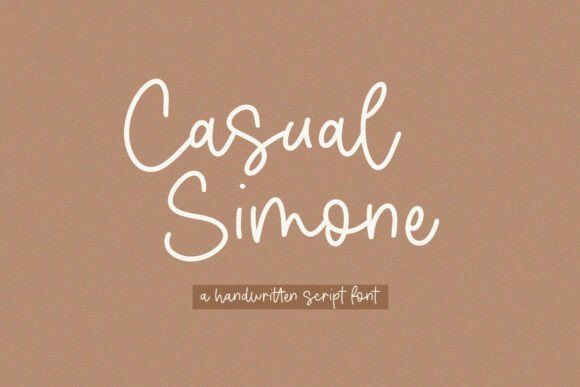
In the world of digital design, finding a typeface that feels genuinely human can be a challenge. Casual Simone, a handwritten script font introduced by Timurtype Studio, bridges the gap between digital precision and the organic warmth of real handwriting. With its expressive brush-like strokes and slightly irregular letterforms, this font offers a relaxed, informal vibe that is perfect for social media graphics, personal branding, wedding invitations, and creative merchandise. However, despite its approachable appearance, using a font like Casual Simone effectively requires more than just a simple drag-and-drop. Many creators, from freelancers to small business owners, encounter pitfalls when integrating such distinct typography into their work.
Understanding the Core Identity of Casual Simone
Before diving into application, it is crucial to understand what makes this typeface unique. Casual Simone is designed to mimic the natural flow of hand-lettering. Unlike rigid sans-serif fonts, it features smooth curves and varying stroke weights that simulate the pressure of a pen or brush. This creates a friendly and approachable tone, making it an excellent choice for projects that need to communicate warmth and personality. It supports multilingualism, making it a versatile tool for global creators, and comes in standard web and desktop formats including OTF, TTF, and WOFF.
The Misunderstanding of "Casual" in Typography
A common mistake beginners make is equating "casual" with "messy." When designers first use a handwritten script font like Casual Simone, they often assume it works for everything because it feels "fun." This leads to poor decision-making where the font is applied to serious corporate reports or dense instructional manuals. The result is a presentation that lacks credibility and frustrates the reader. While Casual Simone adds personality, it is not a universal replacement for functional body text. Treating it as such can harm the user experience, particularly for older audiences who may struggle to decipher cursive flows in long paragraphs.
Avoiding the Readability Trap
The most significant error in using expressive script fonts is prioritizing style over substance. Casual Simone features beautiful, flowing connections between letters, but if used at a small size or over a complex background, that beauty turns into visual noise.
Size and Spacing: The Non-Negotiables
When working with Casual Simone, you must respect the white space. Beginners often squeeze this font into tight text boxes or use it for body copy (paragraphs of text). This is a usability failure. Handwritten fonts are legible at larger sizes but become a blur when scaled down to 12pt or 14pt.
Practical Advice: Use Casual Simone exclusively for headlines, subheadings, pull quotes, or call-to-action buttons. For body text, pair it with a clean, simple sans-serif or serif font. This contrast not only improves readability but also makes the handwritten elements pop. Furthermore, adjust your "tracking" (letter spacing) slightly. Because the font has irregular edges, letters can sometimes collide. A slight increase in tracking can prevent the "muddy" look that ruins many designs.
Contextual Application and Audience Alignment
Another overlooked detail is the disconnect between the font’s personality and the project's context. Casual Simone is perfect for a bakery’s Instagram stories, a yoga studio’s branding, or a personal blog header. However, it can feel out of place in industries requiring high authority or technical precision, such as law firms or engineering reports.
Matching Tone with Typography
Imagine a financial consultant using Casual Simone for their quarterly report title. The informal strokes might inadvertently suggest a lack of seriousness, potentially eroding client trust. Conversely, a children’s party planner using a stiff, corporate font might seem cold and uninviting.
Better Approach: Before downloading or applying the font, define your brand voice. Is your goal to be perceived as a friend or an authority? Casual Simone is your ally when you want to be a friend. If you need to establish authority, use it sparingly—perhaps only for a monogram or a watermark—to add a touch of humanity without compromising your professional stance.
Technical Pitfalls: Ligatures and Multilingual Support
One of the features of Casual Simone is its support for multilingual characters. However, a frequent oversight occurs when users do not check how specific characters interact. In script fonts, the connection between the "tail" of a 'g' and the entry stroke of an 'h' (for example) is vital. If a user types a combination that the font doesn't have a specific ligature for, it can look disjointed.
Checking Your File Formats
The font is provided in OTF, TTF, and WOFF formats. A mistake many freelancers make is using the wrong file type for their medium.
- TTF (TrueType Font): Generally better for older Windows compatibility and basic usage.
- OTF (OpenType Font): This is the superior choice for designers. It contains more "glyphs" (alternate characters) and allows for better typographic control. Always install the OTF version if you are using design software like Adobe Illustrator or Photoshop.
- WOFF: This is strictly for web use. Do not try to install this on your desktop computer for design work; it will not function correctly.
Correction: Always install the OTF version to access the full range of stylistic alternates that make Casual Simone look authentic. If you are building a website, convert or use the provided WOFF files to ensure fast loading times without sacrificing the font's quality.
Color and Contrast Considerations
Because Casual Simone mimics brush strokes, it has varying levels of opacity and thickness. A common aesthetic mistake is pairing it with low-contrast backgrounds.
If you place this font in a light grey color over a white background, the thinner parts of the brush strokes will disappear, making the text illegible. Similarly, placing it over a "busy" photograph without a text overlay or background shape is a recipe for disaster.
Solution: Ensure high contrast. Use solid colors for the font or place a semi-transparent shape behind the text to separate it from the background image. This preserves the integrity of the brush-like strokes and ensures your message is communicated clearly.
Final Thoughts on Evaluation
Choosing Casual Simone is a decision to bring warmth and approachability to your design. It is a tool that, when used correctly, elevates a project from generic to memorable. However, it demands respect for its limitations. By avoiding the temptation to use it for dense text, ensuring proper file format usage, and maintaining high contrast, you can leverage this handwritten script font to its full potential.
Whether you are designing a wedding invitation, a social media post, or branding for a startup, remember that the goal of typography is communication. Casual Simone communicates friendship and creativity; ensure your layout supports that message rather than hindering it. Enjoy the creative process, and let your designs speak with a natural, human voice.