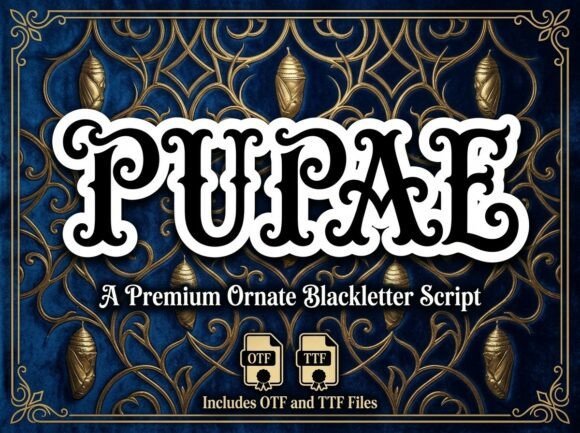
Pupae: A Detailed Evaluation of a Display Script for Luxury Branding
In the search for a typeface that communicates heritage, elegance, and a distinct personality, designers often turn to display scripts. The Pupae font presents itself as a contender in this space, offering a unique blend of historical influences. This article provides an objective evaluation of Pupae, exploring its characteristics, ideal applications, and practical considerations to help you determine if it aligns with your design goals.
Understanding the Core Design of Pupae
At its heart, Pupae is an exquisite display script. It is not intended for body text but for headlines, logos, and short, impactful phrases where its personality can shine. Its design foundation is rooted in classic, high-contrast blackletter forms, which are historically associated with manuscript illumination and formal documents. However, Pupae diverges from strict historical replication by incorporating rhythmic, hand-drawn chrysalis spirals and delicate, baroque-inspired flourishes. This combination creates a bridge between the structured authority of traditional lettering and the fluid, decorative artistry of the Renaissance and Baroque periods.
The result is a font with regal and renaissance soul. Its elegant structural weight ensures it commands attention without appearing overly heavy or illegible. The sophisticated personality makes it a tool for projects that require a narrative of craftsmanship, history, and refined taste.
Evaluating the Suitability of Pupae for Your Project
Choosing a typeface like Pupae is a strategic decision. Its effectiveness depends entirely on context. Below is an analysis of scenarios where it may be a strong fit, and others where alternatives could be more practical.
Where Pupae Excels
Pupae is engineered for specific, high-end applications where visual storytelling is paramount. Its design inherently conveys a sense of luxury, tradition, and artisanship. Consider it for:
- Independent Artisanal Branding: For small-batch producers of goods like artisanal fragrances, specialty chocolates, or premium spirits, Pupae can help establish an identity of meticulous craft and heritage.
- Boutique Winery Identities: The font's connection to historical manuscripts and its elegant weight can complement the narrative of terroir, tradition, and careful cultivation associated with boutique vineyards.
- High-End Event Stationery: In contexts like luxury wedding invitations, gala programs, or exclusive event announcements, Pupae adds a layer of formality and ornate beauty.
- Impactful Digital Headers: For social media headers, website hero sections, or digital magazine covers, it can create a strong visual anchor that communicates originality and sophistication, helping a brand stand out.
In these situations, Pupae acts as more than a font; it becomes a central element of the brand's aesthetic and story.
Considering Alternatives and Tradeoffs
While powerful, Pupae is not a universal solution. Its distinctive design comes with tradeoffs that must be weighed.
Readability at Small Sizes: The very flourishes that give Pupae its character can reduce legibility when used at small point sizes or in lengthy text. For body copy, captions, or fine print, a complementary sans-serif or clean serif font is essential.
Modern and Minimalist Contexts: If a project's core identity is sleek, modern, and minimalist, Pupae's ornate nature may create visual dissonance. In such cases, a more neutral geometric sans-serif or a clean, modern serif might be a more appropriate primary choice.
Overuse and Visual Fatigue: Using Pupae for every textual element can overwhelm a design and dilute its impact. It is best used sparingly and strategically, paired with simpler, highly legible typefaces for supporting information.
When evaluating options, ask: Does my project's story require the historical weight and decorative detail of a blackletter-inspired script? Or would a simpler script or a different style of serif better serve the message?
Practical Decision-Making Insights
To determine if Pupae aligns with your needs, integrate these practical steps into your design process:
- Define Your Project's Narrative: Is the goal to evoke tradition, luxury, and craftsmanship? If the answer is yes, Pupae warrants further exploration.
- Test in Context: Do not evaluate the font in isolation. Create mockups of your logo, header, or key design element using Pupae. Assess how it interacts with your color palette, imagery, and other typographic choices.
- Check Licensing and Usage: Ensure the font's license permits your intended use, whether for digital, print, or merchandise. Verify that all necessary character sets and glyphs are available for your language.
- Pair with Purpose: Identify a strong, readable companion font for all secondary text. Test the pairing for harmony and contrast. The goal is for Pupae to headline, not to dominate every line.
- Consider the Audience: While the font appeals to a sense of the exquisite, ensure it resonates with your target demographic. For audiences that prioritize cutting-edge modernity, it may feel anachronistic.
Ultimately, the decision to use Pupae should be driven by a clear alignment between the font's inherent character and the communicative goals of your project. It is a specialized tool for creating a specific, regal aesthetic, and when used thoughtfully, it can metamorphose a design into something truly original.