Drackursa Typeface: A Professional Evaluation of a Modern Death Metal Font
In the landscape of typography, specialized display fonts serve a critical function for designers working in specific genres. The Drackursa Typeface is one such asset, engineered to meet the visual demands of modern death metal and extreme music aesthetics. This evaluation examines its design principles, practical applications, and overall value for creative professionals. Understanding its strengths and limitations is essential for determining if it aligns with a project's goals.
Anatomy of a Typeface for Extreme Aesthetics
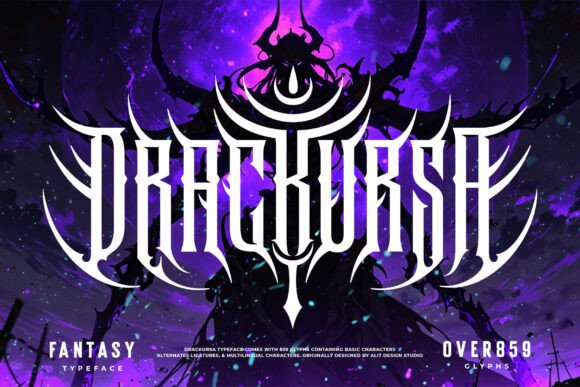
Drackursa is a bold, display typeface where every letterform is intentionally crafted to evoke a sense of darkness, chaos, and raw power. Its design language is built upon sharp, thorn-like edges and menacing, horn-reminiscent curves. This is not a font for body text; it is a visual statement piece. The characters function less as conventional letters and more as intricate symbols, embodying a malevolent energy through jagged spikes and sinuous, aggressive forms. The overall effect is one of piercing through order, which is a core thematic element in death metal and related subcultures.
The typeface's aesthetic is a blend of the arcane and the modern. While its roots are firmly in the gothic and extreme metal tradition, its execution feels contemporary. This duality is a significant strength, allowing it to feel both timeless within its genre and relevant to current design trends. The high level of detail in each glyph ensures that at large scales, the font reveals its full, intricate character, making it particularly effective for projects where visual impact is paramount.
Practical Applications and Real-World Use Cases
The primary value of a typeface like Drackursa lies in its ability to immediately communicate a specific mood and genre association. For designers and creators, this reduces the need for complex explanatory graphics; the font itself does much of the communicative heavy lifting.
Key practical applications include:
- Album Artwork and Band Logos: This is its native environment. Drackursa can form the core of a band's visual identity, ensuring instant recognition and genre alignment on album covers, merchandise, and digital platforms.
- Event and Gig Posters: For concerts, festivals, or club nights featuring extreme metal, hardcore, or dark electronic music, the typeface provides a powerful, attention-grabbing headline that sets the correct tone.
- Game and Media Design: Projects involving dark fantasy, horror, or gritty sci-fi themes can utilize Drackursa for titles, chapter headings, or in-game signage to reinforce the world's atmosphere.
- Branding for Niche Products: Businesses or creators operating in the extreme sports, occult, or alternative fashion spaces might find it suitable for logos or campaign headlines, provided it aligns with their brand voice.
Its effectiveness is highest in large-scale, eye-catching displays where its detailed edges can be appreciated. In smaller sizes or dense paragraphs, legibility would suffer significantly, which is a common and expected trade-off with highly stylized display fonts.
Evaluating Strengths and Usability
From a technical and design perspective, Drackursa presents several notable strengths. The consistency of its aggressive design language across the entire character set is crucial. Every letter, number, and symbol maintains the same thorny, horned aesthetic, ensuring visual harmony when composing words and phrases. This consistency is a marker of a well-crafted specialty typeface.
The font's high-contrast, detailed forms are engineered for maximum visual impact in the correct context. When used on album covers or posters, it can create a commanding presence that stands out in a crowded visual field. For a designer working within the metal genre, having a reliable, high-quality asset like Drackursa can streamline the creative process, providing a solid foundation upon which to build a larger design.
However, its usability is inherently niche. It is not a flexible, multi-purpose font. Its power is also its limitation; it carries such a strong stylistic charge that it would be inappropriate for most corporate, editorial, or minimalist design projects. A professional must assess whether the font's intense personality aligns with the project's audience and message, or if it risks overwhelming the design.
Who Benefits Most from This Typeface?
The ideal user for Drackursa is a professional or serious hobbyist who regularly creates content for audiences within the extreme music, dark fantasy, or alternative culture spheres. This includes:
- Graphic Designers specializing in music packaging, merchandise, or event promotion for metal, punk, or industrial scenes.
- Band Managers or Musicians looking to develop a cohesive and genre-authentic visual brand.
- Game Developers or Writers creating content for dark-themed narratives and need impactful titling.
- Small Business Owners in niche markets (e.g., tattoo studios, alternative clothing lines, specialty breweries) whose brand identity embraces rebellion, darkness, or intensity.
For these users, Drackursa is not just a font but a tool for instant genre communication. Its value is realized when it helps a project resonate authentically with its intended audience.
Professional Considerations and Final Assessment
When evaluating Drackursa, it is important to consider its long-term utility. As a trend-specific typeface, its relevance is tied to the enduring popularity of its associated aesthetic. Given that death metal and gothic styles have maintained a dedicated following for decades, the font likely holds good long-term value for professionals working consistently in that space.
Before integrating it into a workflow, one should test it across intended use cases. How does it render on different materials—paper, fabric, screen? Does it pair well with simpler, neutral sans-serifs for body copy, or does it demand a similarly styled companion? These practical tests determine its real-world reliability.
In conclusion, Drackursa Typeface is a specialized instrument with a clear and powerful purpose. It excels at what it is designed to do: provide a bold, fearsome, and intricate typographic voice for projects steeped in darkness and rebellion. Its worth is not in universal application, but in its focused ability to deliver a specific aesthetic with professional-grade consistency and impact. For the right creator and the right project, it is a valuable asset that can significantly enhance the visual narrative.