Branch Out with Ebony: A Typeface for Wild Branding
Understanding the Organic Architecture of Ebony
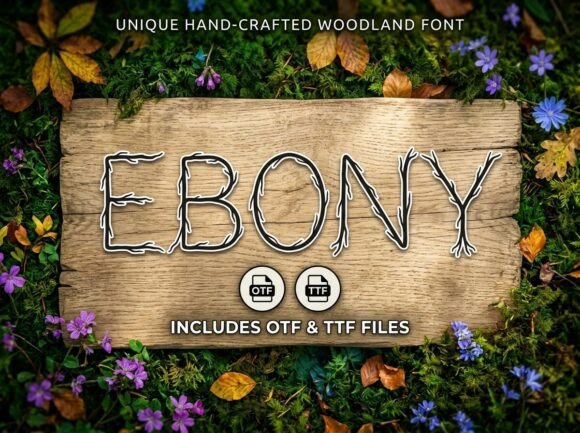
In the vast landscape of digital typography, where geometric sans-serifs and polished serifs often dominate, finding a typeface that feels genuinely alive can be a challenge. Ebony offers a striking solution to this creative void. It is not merely a font; it is a raw display typeface that captures an untamed and organic soul. The fundamental design philosophy behind Ebony relies on slender, monoline letterforms. However, unlike standard line fonts, these characters are masterfully constructed from rhythmic, hand-drawn thorny vines and gnarled twigs. This unique construction creates a skeleton for each letter that feels primitive yet sophisticated.
The visual weight of Ebony is intentionally light, allowing the intricate details of the vine-like strokes to breathe. This structural lightness prevents the text from becoming overwhelming, even when used in large blocks. For designers and creators, this means you can achieve a high-impact aesthetic without sacrificing readability at display sizes. The primitive personality of the font evokes a sense of ancient storytelling, making it a premier choice for projects that require a connection to nature, folklore, or the mystical.
Strategic Applications for Independent Brands
For entrepreneurs and small business owners, branding is about differentiation. If your business operates within the outdoor, artisanal, or wellness sectors, Ebony provides a distinct visual voice. It moves away from the sterile look of modern minimalism and offers a tactile, handmade quality that consumers often crave.
- Rustic Outdoor Identities: Adventure companies, eco-lodges, and sustainable clothing brands can utilize Ebony to establish a rugged, earthy identity. The font suggests a respect for the environment and a spirit of exploration.
- Independent Folklore Branding: Craft breweries, independent bookstores, or folk music venues can leverage the typeface to signal authenticity. It communicates a story of handcrafted quality and community roots.
- Mythological Storytelling: If you are publishing a fantasy novel, creating a tabletop RPG, or launching a podcast about history and myths, Ebony sets the stage immediately. It tells the audience that the content is imaginative and grounded in narrative tradition.
When integrating Ebony into a brand system, it is crucial to pair it wisely. Because Ebony has such a strong personality, it should be reserved for headlines and logos. For body copy, pair it with a clean, highly legible sans-serif or a classic serif font. This contrast ensures that the wild spirit of Ebony enhances the message rather than competing with the supporting text.
Creative Execution for Designers and Marketers
Graphic designers often struggle to find typefaces that work well for high-impact wild-and-weathered social media headers. Social media feeds are cluttered, and standard fonts often fade into the background. Ebony, with its rhythmic structure and organic texture, commands attention.
Digital Presence and Web Design
When using Ebony for web headers, consider the background texture. The font shines brightest when contrasted against clean photography—such as a misty forest or a stone wall—or solid, dark backgrounds. The "thorny vine" details become more visible when there is ample negative space. Avoid placing this font over busy, multicolored images, as the slender lines may get lost.
For bloggers focusing on travel, nature, or DIY crafts, using Ebony for your main title card can instantly elevate the perceived value of your content. It suggests that the content is curated and thoughtful, rather than generic. It acts as a visual signature that readers will begin to associate with your specific voice.
Print and Packaging
The utility of Ebony extends beyond the screen. In print, particularly on textured paper stocks like uncoated cotton or recycled kraft paper, the font takes on a tactile quality. It is excellent for:
- Event Invitations: Garden parties, bohemian weddings, or autumn festivals benefit from the whimsical yet structured nature of the typeface.
- Product Packaging: Small-batch goods, herbal teas, or organic cosmetics can use Ebony to emphasize natural ingredients and traditional manufacturing methods.
- Editorial Layouts: Magazines covering lifestyle, botany, or art can use Ebony for drop caps and pull quotes to break up grid layouts and add visual interest.
Adapting Ebony for Different Audiences
While the font has a specific aesthetic, its application can be nuanced to suit various demographics. The key is context. A 25-year-old graphic designer might use Ebony for a music festival poster, focusing on the "untamed" aspect of the font. Conversely, a 45-year-old educator creating materials for a history unit might use the same font to evoke "ancient scripts" and historical gravitas.
For marketers, the goal is to align the font's personality with the audience's values. If your audience values sustainability, emphasize the "organic" and "natural" traits of the letterforms. If your audience is interested in fantasy or gaming, highlight the "primitive" and "mystical" qualities. The font does the heavy lifting of setting the mood, but the designer must ensure the supporting elements—color palette, imagery, and copy—reinforce that specific interpretation.
Maintaining Clarity and Hierarchy
A common pitfall with display typefaces is overuse. To keep results clear and effective, adhere to a strict typographic hierarchy. Use Ebony exclusively for H1 headings or hero text. Do not use it for subheadings or body text; the complexity of the vine structures will make smaller text illegible and fatiguing to read.
Furthermore, consider the tracking (letter-spacing). Because the letterforms are constructed from organic shapes, they may require slight adjustments in tracking to ensure the "twigs" of adjacent letters do not collide awkwardly. Giving the letters room to breathe enhances the "wild" aesthetic and maintains legibility.
Inspiration for Storytelling Projects
Storytelling is at the heart of Ebony's design. It is a font that seems to whisper stories of the woods, the mountains, and the old world. Educators and content creators can use this to their advantage. Imagine a digital presentation on environmental science using Ebony for slide titles; it subtly reinforces the subject matter through design alone.
Freelancers working on book covers for the "New Adult" or fantasy genres will find Ebony particularly useful. It bridges the gap between young, modern aesthetics and the classic look of vintage fantasy illustrations. It suggests magic without relying on cliché gothic tropes. Instead, it offers a fresh, botanical take on the supernatural.
Ultimately, Ebony is more than just a decorative option. It is a tool for grounding digital projects in the physical world. By mimicking the imperfections and rhythms of nature—thorny vines and gnarled twigs—it brings a level of humanity and warmth that polished vector fonts often lack. Whether you are building a brand from scratch or refreshing a social media presence, incorporating this raw, monoline typeface is a step toward creating a more authentic and engaging visual narrative.