Raizent: A Practical Look at This Experimental Curve Sans Typeface
Finding a typeface that balances distinctiveness with usability is a common challenge for designers and creators. The Raizent typeface presents itself as a modern solution, positioned as an experimental curve sans serif designed for high-impact, display-focused applications. It’s a font that doesn’t aim to blend in; its core proposition is to be memorable through its unique construction. For professionals working on branding, digital interfaces, or editorial layouts, understanding a font’s real-world performance is more important than its novelty. This analysis explores the practical characteristics of Raizent, its intended use cases, and who might benefit most from adding it to their typographic toolkit.
Core Design Philosophy and Key Characteristics
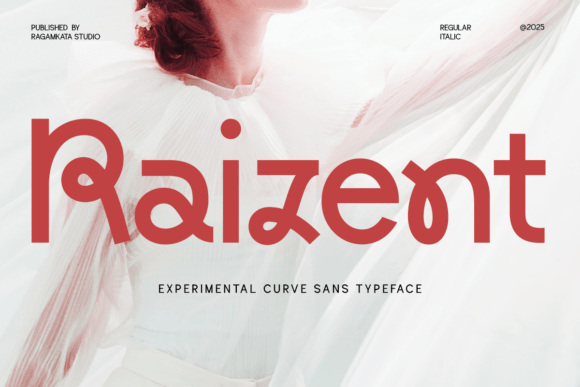
At its foundation, Raizent is a monolinear, chunky sans serif. The term "monolinear" indicates that the stroke width remains largely consistent throughout each letterform, contributing to a clean, uniform appearance. The "chunky" descriptor points to its robust, substantial weight, designed to command attention at larger sizes. The defining feature, however, lies in its treatment of terminals and strokes. Letters like the capital ‘R’, lowercase ‘a’, and ‘z’ exhibit unconventional, yet precise, rounded entry and exit strokes. This isn’t merely a stylistic flourish; it fundamentally shapes the font’s personality, lending it a slightly playful yet sophisticated and futuristic character.
This design approach places Raizent firmly in the category of a display typeface. Its legibility and intended impact are optimized for headlines, logos, and short, impactful text blocks rather than extended body copy. The font family includes both regular and italic weights, offering a basic but functional range for creating visual hierarchy—using the italic for emphasis or secondary information without introducing a wholly different typeface. Furthermore, Raizent is PUA-encoded. This technical detail is significant for designers, as it ensures that all glyphs, including swashes and alternate characters, are accessible through standard software without requiring specialized OpenType feature panels. This can streamline the customization process for projects requiring unique typographic details.
Practical Applications and Real-World Performance
The value of a typeface like Raizent is best evaluated through its application. Its design makes it a strong candidate for projects that require a minimalist yet highly stylized aesthetic. Consider its use in innovative branding for a tech startup or a creative agency. The font’s futuristic curve could help convey a sense of forward-thinking innovation and approachability, differentiating a brand in a crowded market. Similarly, in contemporary magazine layouts, a Raizent headline could set a dynamic tone for a feature article on design, technology, or modern culture.
For digital applications, its strengths are equally apparent. Striking website headers and tech-focused advertising are natural fits. The font’s inherent weight and clarity ensure it remains impactful on screen, even at varying resolutions. Its clean lines also suggest it would translate well to mobile interfaces for app names or key navigational elements where immediate recognition is crucial. In the realm of print media, from book covers to posters, Raizent could serve as a focal point, drawing the eye and establishing a clear, modern mood.
However, practical use demands acknowledging limitations. Its distinctive curves, while a strength in display contexts, could potentially reduce readability in long-form text or at very small sizes. The "experimental" nature of its design might also feel out of place in contexts demanding traditional, conservative typography, such as legal documents or academic papers. Its effectiveness is therefore highly contextual, relying on the designer’s skill to deploy it where its unique attributes are an asset, not a distraction.
Who Stands to Benefit Most from This Typeface?
Raizent is not a universal workhorse font. Its value is most pronounced for specific user groups working on particular types of projects. Graphic designers and branding specialists seeking to inject a contemporary, slightly avant-garde feel into visual identities will find it a useful tool. Its memorability can be a strategic advantage in logo design.
Web designers and UI/UX professionals focused on creating engaging, modern digital experiences may appreciate its performance in headlines and key calls to action. Marketing professionals and content creators designing social media graphics, presentation decks, or promotional materials could use Raizent to create visually cohesive and attention-grabbing assets that stand out in feeds and on slides.
Freelancers and small business owners building their own brand materials, from business cards to website banners, might find its ready-to-use alternates and straightforward access via PUA encoding helpful for achieving a polished look without extensive typographic expertise. Educators and publishers developing materials for tech or design courses could also leverage its style to mirror the subject matter’s modernity.
Evaluating Quality, Usability, and Long-Term Value
The quality of Raizent can be assessed through its consistency and technical execution. The monolinear structure demands precise engineering to maintain balance across all characters. The rounded strokes must be optically adjusted to avoid appearing clumsy or uneven. Its usability is enhanced by the inclusion of both regular and italic styles and the PUA encoding, which lowers the barrier to accessing its full character set. This makes it a practical choice for projects with tight deadlines.
In terms of flexibility, it is somewhat specialized. It excels in the display category but is not intended for paragraph text. A designer’s workflow would likely pair Raizent with a more neutral, highly legible sans serif or serif for body copy to create a balanced typographic system. Its reliability hinges on proper file quality and licensing, which are standard considerations for any commercial font.
The long-term value of a typeface like this is tied to its versatility within its niche. While design trends evolve, a well-crafted, distinctive display font can retain its utility for years, especially if it becomes associated with a successful brand or project. Raizent’s futuristic yet approachable character gives it a certain timeless quality within the modern design spectrum. For creators who regularly work on projects requiring a bold, contemporary voice, it could become a recurring and valuable asset in their library.
Final Considerations for Your Project
Deciding whether Raizent fits your needs comes down to a clear-eyed assessment of your project’s goals and audience. If your work demands a typeface that is immediately recognizable, conveys modernity and innovation, and will be used in a headline or logo context, it is certainly worth exploring. Its design is intentional and executed with a clear point of view.
Before committing, it is advisable to test it with your specific content. Set your intended headlines, logos, or key phrases. Evaluate how the rounded strokes interact with your word shapes. Ensure the personality it projects aligns with the message you wish to communicate. Consider how it pairs with your chosen body font—does the contrast feel harmonious or jarring? By focusing on these practical tests, you can make an informed decision about whether Raizent’s unique curve sans style is the right tool to help you achieve your creative and communicative objectives.