Country Notes: Stitching Together Authenticity in Modern Brand Design
In the saturated landscape of digital marketing, the quest for authenticity often leads brands back to tactile, sensory experiences. Typography plays a pivotal role in this sensory journey, acting as the voice of the visual identity before a single word is read. Country Notes represents a distinct evolution in display typefaces, offering a solution that bridges the gap between the warmth of traditional quilting arts and the structural demands of modern artisanal branding. It is not merely a font; it is a visual dialect that speaks of craftsmanship, heritage, and intentional creation.
The Anatomy of the Tactile Display Typeface
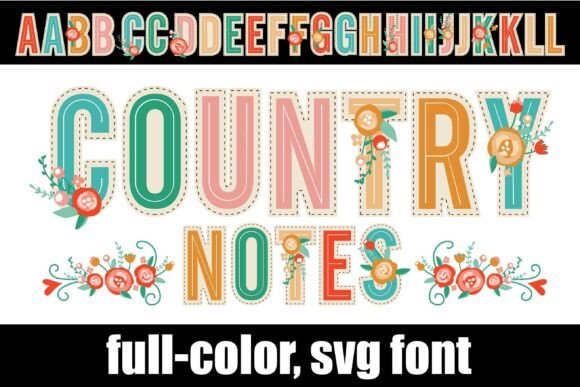
Understanding the technical and aesthetic composition of Country Notes is essential for leveraging its full potential. As a full-color SVG (Scalable Vector Graphics) font, it moves beyond the limitations of monochromatic text, allowing for intricate textures and gradients to be embedded directly into the letterforms. This technology enables the font to maintain high-resolution details, such as the rhythmic stitched-edge borders and warm floral accents, regardless of the size at which it is displayed.
The structural weight of the typeface is bold and heavy, designed to command attention in header applications. However, this heaviness is balanced by a "cozy personality." The letterforms are blocked and sturdy, yet the surface details—simulating thread and fabric—soften the visual impact. This duality allows Country Notes to convey reliability and strength while simultaneously evoking comfort and approachability. The integration of floral motifs within the letter structures serves as a nod to the history of decorative needlework, grounding the digital asset in a tangible, historical context.
Strategic Applications in Visual Identity
The utility of a specialized typeface like Country Notes lies in its specific application. It is not intended for body text or technical documentation; rather, it excels in high-impact, emotional touchpoints. For independent craft studios, the font serves as an immediate visual identifier of the industry. It eliminates the need for excessive explanatory graphics, as the typography itself communicates the nature of the business.
Logo Design and Brand Marks
For boutique fabric shops and handmade product packaging, a logo sets the expectation for quality. Country Notes provides a built-in texture that mimics the look of a stamped or embroidered logo. When used in a primary logo mark, it anchors the brand in a narrative of handcraft. However, designers must consider the background against which the logo sits. Because the font carries significant visual texture, it pairs best with solid, matte backgrounds that allow the stitching details to stand out without visual competition.
Digital Presence and Social Media
In the realm of social media, where scrolling speeds are rapid, the "thumb-stopping" power of an image is paramount. The heavy structural weight of Country Notes makes it ideal for high-impact headers and promotional banners on platforms like Instagram and Pinterest. The full-color capability ensures that the text does not get lost in busy imagery. For a cohesive digital strategy, using this font for key callouts—such as "New Collection" or "Handmade with Love"—creates a consistent thread between the physical product and the digital storefront.
Bridging Traditional Craft and Modern Design
There is a growing trend in design to incorporate elements of "slow living" and traditional arts into digital spaces. Consumers are increasingly drawn to brands that appear human-centric rather than corporate. Country Notes taps into this psychological trigger by visualizing the imperfections and warmth of handmade goods. The "stitched" aesthetic suggests time, care, and human involvement—qualities that are highly valued in the artisanal economy.
This typeface acts as a bridge for educators and researchers in the field of design history as well. It serves as a practical example of how vernacular crafts (quilting, embroidery) are being digitized and repurposed for contemporary commercial use. For business owners, this connection offers a way to honor tradition while operating in a modern marketplace. It signals to the consumer that the brand values heritage, even if the transaction is happening online.
Technical Considerations for Implementation
While the aesthetic appeal of Country Notes is evident, successful implementation requires technical diligence. As an SVG font, it carries a larger file size than standard OpenType or TrueType fonts. This is due to the embedded color data and vector complexity required to render the floral and stitching details. Consequently, it is optimized for display use only.
- Web Performance: Loading an SVG font can impact page speed. It is recommended to use this typeface for static images or critical "above-the-fold" headers where caching can be utilized, rather than for dynamic, scrollable content.
- Software Compatibility: SVG fonts (specifically the COLR/CPAL or SVG table formats) require modern design software and web browsers for rendering. Legacy systems may fallback to a standard representation or fail to display the color and texture details entirely.
- Scalability: Despite being vector-based, the intricate details of the stitching may become illegible at very small sizes. Country Notes should be reserved for large-scale applications, typically 30pt and above, to ensure the design intent is clear to the viewer.
Contextualizing Country Notes in the Market
When compared to standard sans-serifs or generic decorative fonts, Country Notes occupies a specific niche. It competes not on versatility, but on specificity. A standard serif font might suggest tradition, but it lacks the tactile "thread" element. A standard display font might be bold, but it often lacks the warmth and narrative depth found in the floral accents of Country Notes.
For the independent creator, this specificity is a competitive advantage. It allows for a brand narrative that is distinct and memorable. In a marketplace where "handmade" can sometimes feel like a buzzword, visual proof of that ethos through typography adds a layer of credibility. It transforms the brand identity from a label into a story, inviting the audience to engage with the texture and history embedded in the design.
Workflow Integration for Creators
Integrating a specialized asset like Country Notes into a design workflow requires a shift in mindset. Designers must treat the font as an illustration element rather than just typesetting. This involves careful kerning and leading adjustments to ensure the floral accents do not collide awkwardly with adjacent characters or surrounding design elements.
- Color Palette Alignment: Since the font features warm floral accents, the surrounding color palette should complement these hues. Earth tones, deep greens, and muted pastels often work best to support the "homespun" aesthetic.
- Pairing Strategies: To maintain readability and hierarchy, Country Notes should be paired with a clean, neutral typeface for subheadings and body copy. A simple sans-serif or a clean slab serif provides a necessary visual rest for the eye, allowing the display font to shine without causing visual fatigue.
- Asset Preparation: When preparing assets for print, designers must ensure the print shop supports full-color process printing (CMYK) to accurately reproduce the SVG color data. Spot color printing (Pantone) is generally not compatible with the multi-tonal nature of SVG fonts without significant file conversion and loss of detail.
Ultimately, Country Notes is more than a digital tool; it is a stylistic commitment. It requires the designer and the brand owner to fully embrace a narrative of warmth, texture, and handmade quality. When deployed correctly, it elevates the visual identity, creating a sensory experience that resonates deeply with audiences seeking genuine connection in a digital world. It stands as a testament to the enduring power of craft in modern communication.